Complaints Procedure for Bulk Waste Collection and Bulky Item Services
Purpose and Scope
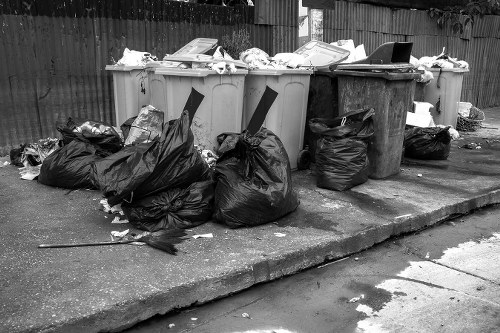 This complaints procedure explains how concerns about bulk waste collection, bulky item collection and related large-item pickup services are handled. It applies to complaints about missed collections, unsafe placement, damage, or process failures when arranging bulk rubbish collection. The aim is to ensure fairness, transparency and timely resolution while promoting continuous improvement across bulky waste removal services.
Who can complain and what is covered
The procedure is available to any individual or representative who is affected by a bulk waste pickup service. Complaints about policy choices are considered where they affect service delivery. Exclusions include disputes already resolved by lawful determination or matters under formal legal proceedings. The process is designed to be accessible and to treat every concern with respect and confidentiality.
 Submitting a complaint: Complaints may be raised in writing or through an organisation's official reporting channel. Provide clear details such as the date, location, description of the bulky waste involved, any reference numbers and what outcome you seek. If supporting materials exist ??? photographs, booking records, or witness notes ??? include them to help with the investigation. Complaints should be lodged as soon as reasonably possible after the incident to preserve key information.
Acknowledgement and Initial Assessment
Upon receipt, complaints are acknowledged promptly. The acknowledgement will confirm that the complaint has been logged and will outline the next steps, including an expected timeline for a substantive response. A brief initial assessment determines whether the complaint is within scope, whether an immediate remedial action is required, and which team will investigate the bulky waste removal issue.
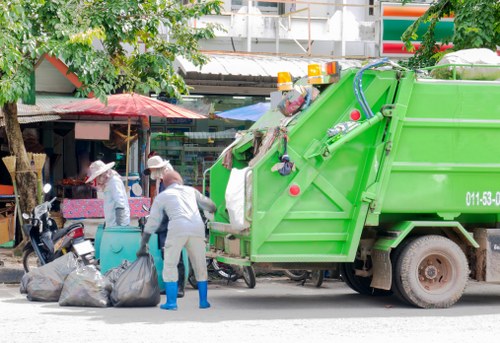 Investigation process: Investigations are proportionate to the nature and severity of the complaint. Typical steps include collecting records, interviewing staff or contractors involved in the large-item collection, reviewing photographic evidence and assessing compliance with operating procedures. The investigator will document findings and recommend corrective actions. The process aims to be thorough while avoiding unnecessary delay.
The timeline for investigation varies by complexity. Simple operational complaints may be resolved within a few working days; more complex matters could take several weeks. Throughout, the complainant is kept informed of progress and any reasonable adjustments to timescales. If immediate safety or public health concerns arise, they will be prioritised.
Outcomes, Remedies and Recording
![A large outdoor stack of untreated wooden pallets arranged in multiple layers, forming a rectangular pyramid shape on a paved surface in an industrial or storage yard setting. The pallets are light natural wood with visible grain and some minor weathering, and are stacked closely together, with some lying flat and others leaning or arranged multi-tiered. To the left, there are smaller wooden crates or pallet sections, also composed of similar light wood, positioned at an angle. In the background, a metal fence with vertical bars and a section of a building or warehouse structure are partly visible, indicating a secure storage area. The scene is illuminated by natural daylight, with shadows cast across the pallets and pavement, consistent with a typical industrial environment that Bulk Waste Collection might serve for rubbish and waste disposal services in the region near [POSTCODE] or [TOWN].](/pub/_photos/rubbish/f1486209024.jpg) Possible outcomes include an explanation of findings, an apology where service fell short, corrective action such as re-collection or schedule correction, and process changes to prevent recurrence. In some situations, compensation may be considered in line with policy principles when loss or damage is demonstrated. All outcomes are proportionate and aim to restore confidence in the bulk waste collection service.
Possible outcomes include an explanation of findings, an apology where service fell short, corrective action such as re-collection or schedule correction, and process changes to prevent recurrence. In some situations, compensation may be considered in line with policy principles when loss or damage is demonstrated. All outcomes are proportionate and aim to restore confidence in the bulk waste collection service.
Record keeping and confidentiality: Every complaint is recorded in a secure register to track performance, trends and learning. Personal data is handled in accordance with privacy principles; details are shared only with those who need them to investigate and resolve the complaint. Records are retained to support transparency, accountability and service improvement, with access limited to authorised personnel.
 Escalation and further review: If a complainant is not satisfied with the outcome at the initial review stage, they may request escalation to a senior review within the organisation. Where local independent review bodies exist, or where an external ombudsman process is relevant, details of those options are provided as part of the final response when applicable. Escalation routes are designed to be impartial and to provide an additional layer of scrutiny for complex or unresolved matters.
Learning, Improvement and Expectations
Complaints about bulk rubbish collection services are treated as valuable sources of information to drive service improvements. Patterns and recurring themes are analysed periodically to inform training, contractor management and operational change. This ensures that issues such as scheduling, crew guidance, safety procedures and customer instructions are continually refined.
What complainants can expect: A respectful, unbiased and confidential handling of their concern; clear information about the process and likely timeframes; and a reasoned, evidence-based outcome. The organisation commits to learning from mistakes and to making practical changes to prevent future failures in bulky item collection services.
Final notes: The complaints procedure is part of a wider commitment to effective service delivery and accountability. Users are encouraged to raise concerns early and to provide as much relevant information as possible. Each complaint contributes to a better, safer and more reliable bulky waste removal service for the whole community.