Recycling and Sustainability for Bulk Waste Collection
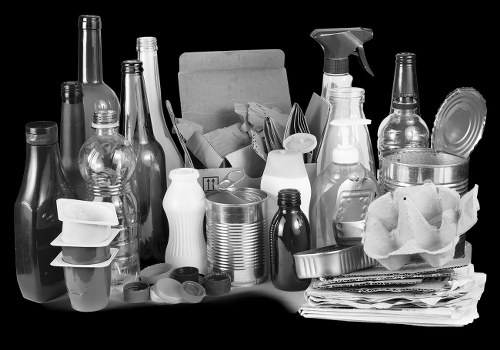 Our bulk waste collection and bulky-item pickup programme is designed to reduce landfill, boost recycling and support local circular-economy partners. We have set a clear recycling percentage target of 70% by 2030 for all large-item collections, focusing on materials recovery from bulky waste streams such as furniture, mattresses, white goods and construction debris. This ambition complements borough-wide waste separation policies where residents separate glass, paper, mixed recycling and garden waste at source to make bulky waste processing more efficient.
Collaboration lies at the heart of our approach to bulky waste collection. We prioritise reuse and refurbishment: items suitable for rehoming are diverted to social enterprises and charity partners, while appliances undergo appliance testing and repair before being reused or recycled. Working with local charities increases the social value of each large-item collection by creating jobs and helping households in need, while reducing the environmental footprint of bulky waste collections.
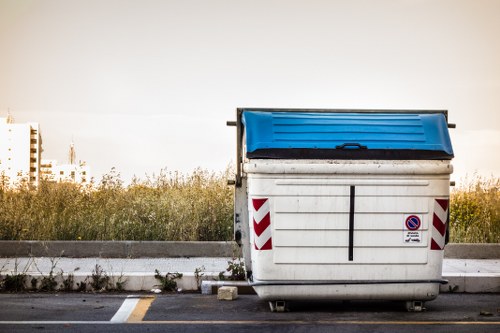 To support these goals our collection routes are optimised for material recovery. The bulk waste collection service operates alongside household kerbside recycling schemes offered by borough councils, and we coordinate with local transfer stations to ensure each load is directed to the right processing facility. Transfer stations act as consolidation points for separated streams ??? wood, metal, textiles and WEEE (Waste Electrical and Electronic Equipment) are sorted for onward recycling or refurbishment.
Local Transfer Stations and Sorting Hubs
Local transfer stations are essential infrastructure for effective bulky waste recycling. At these hubs, crews separate incoming bulky waste into recyclable and non-recyclable fractions, recover hazardous components such as refrigerants from fridges, and prepare reusable goods for partner charities. Our partnerships with civic recycling yards and municipal transfer stations reduce transport emissions by minimising double handling and ensuring that bulky waste is routed to the correct treatment stream quickly.
Key activities at transfer stations include:
- Segregation of metals, timber, furniture and aggregates for recycling
- Safe processing of electrical items and batteries for specialist recycling
- Temporarily storing reusable items destined for charity redistribution
![A spacious outdoor industrial area with a paved concrete surface, featuring multiple large wheelie bins arranged in a row along the edges of the space. The bins are made of durable plastic with smooth, slightly textured surfaces and are painted in various colours including green, red, yellow, and blue, which are standard for waste segregation. Some bins are positioned closer to the foreground on the right side, with others extending into the background near a white, corrugated metal storage shed and industrial buildings. To the left, there are more bins and storage containers, with the area appearing clean and well-maintained. The background includes a tall multi-storey building with a modern facade, and the sky above is partly cloudy with patches of blue and sunlight illuminating the scene. The environment suggests a city or urban commercial setting, consistent with waste collection and rubbish removal services such as those offered by Bulk Waste Collection in the UK. The overall scene depicts an organized waste disposal area, ready for collection or ongoing disposal processes. The setting's subtle urban context aligns with efficient rubbish management around [POSTCODE] or nearby regions, emphasizing professional waste handling environments.](/pub/_photos/rubbish/f1344569344.jpg) We work with borough recycling teams to align bulky waste collections with local waste separation rules. In many boroughs, this means drivers and crews receive training on recognising materials that can be reprocessed or refurbished and on the use of separation signage so residents understand how to prepare items for collection.
We work with borough recycling teams to align bulky waste collections with local waste separation rules. In many boroughs, this means drivers and crews receive training on recognising materials that can be reprocessed or refurbished and on the use of separation signage so residents understand how to prepare items for collection.
Partnerships with Charities and Reuse Organisations
Charity partnerships are a core part of our sustainability strategy for bulky waste collections. Through formal agreements with reuse organisations and social enterprises, we ensure that good-quality furniture, bicycles and white goods are refurbished and resold or donated to people experiencing hardship. These collaborations reduce disposal costs, save embodied carbon by extending product life, and create local employment opportunities in repair and logistics.
 Our bulky waste collection teams coordinate directly with charity partners to schedule drop-offs at social enterprise workshops and donation centres. Where items are unsuitable for reuse, charities help channel materials to specialist recyclers for metal recovery, wood chipping or textile recycling, maximising diversion from landfill.
 To further cut emissions we are rolling out a fleet of low-carbon vans and compact electric collection vehicles dedicated to large-item collection rounds. These low-emission vehicles reduce air pollution in densely populated neighbourhoods and lower the carbon footprint of each bulky-item pickup. Route planning software combined with electric and hybrid vans reduces mileage and improves efficiency for multiple borough bulk waste collection schedules.
Our sustainability commitments for bulk waste services are practical and measurable: meeting the 70% recycling rate for bulky materials by 2030, increasing the proportion of reusable items channelled to charities, and transitioning to a low-carbon fleet across all large-item collection routes. We publish annual performance summaries showing material recovery rates, reuse volumes and fleet emissions, and we continuously refine on-street separation guidance so residents can support local reuse efforts effectively.
In summary, effective large-item collection depends on integrated systems: clear borough separation rules, efficient local transfer stations, strong charity partnerships for reuse, and low-emission vehicles for collection. Together these elements form a resilient, circular approach to bulky waste recycling that reduces environmental impact while delivering social benefits across the community.