Bulk Waste Collection in London
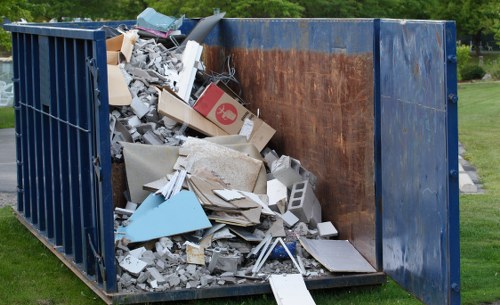
Bulk waste collection in London is a practical way to clear large or awkward items that do not fit ordinary bins, from broken furniture and mattresses to mixed household bulky waste. We handle collections for homes, flats, landlords and businesses, with a clear focus on lifting, loading and responsible disposal. If you need space cleared without arranging transport yourself, our service is set up to deal with the heavy work and the sorting that follows.
The work can be straightforward or more involved depending on access, item type and volume, so it helps to choose a collection that matches the load rather than forcing everything into a single approach. We offer bulky item removal and wider clearance options where several kinds of waste need to go together. That means you can combine items, avoid repeated trips and keep the collection organised around the materials you want taken away.
For larger clear-outs, it is often useful to think about what needs dismantling, what can be carried as a single item, and what may need separating for recycling. That detail shapes the collection plan. If you are ready to compare options, take a look at the service pages below and then request a quotation when you know the rough volume. Start with the service that best fits your items.
What our bulk waste collection covers

Bulk waste collection usually includes items that are too large for standard household disposal, but it can also cover mixed loads where several bulky objects have built up over time. Typical collections may involve sofas, beds, wardrobes, tables, chairs, shelving, broken appliances and general unwanted items. Where appropriate, pieces can be grouped into one visit so the load is removed efficiently rather than pieced out over separate jobs.
We also support related removal tasks such as furniture collection, mattress collection and sofa collection when the load is mostly made up of one kind of item. Choosing a focused service can be helpful if you know exactly what needs to go, while a broader bulk collection works better when several household objects are mixed together and need a single, tidy removal.
Some customers want a simple one-off uplift, while others need a fuller clearance of rooms, outbuildings or storage spaces. In those cases, a bulk waste visit can sit alongside services such as garage clearance or home clearance. The aim is not just to move items away, but to make sure the collection matches the amount, type and condition of waste you are dealing with.
Choosing the right collection for bulky items
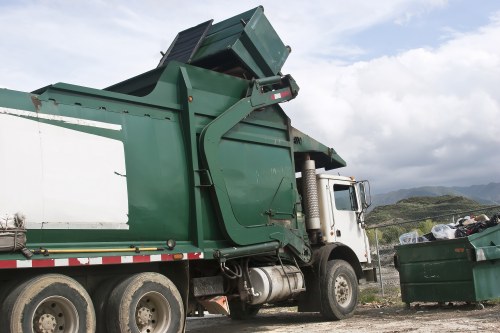
Different bulky items call for different handling, particularly where weight, size or breakability is involved. A mattress, a wardrobe and a fridge each present different practical issues, so the right collection depends on what you have rather than on size alone. If a load includes white goods, upholstery or items made from mixed materials, a more specific removal route may make sorting and disposal clearer.
That is why we provide linked services such as bed disposal, fridge disposal and white-goods recycle. These pages are useful when your waste is made up of a defined item type, especially where the removal method or recycling route needs a little more thought. A general bulk collection remains a sensible choice when the load is varied and you want one visit to deal with it all.
If you are unsure whether an item is best treated as bulky waste or as a separate category, it helps to sort the list before booking. A simple inventory, even if only rough, can make the collection easier to plan and can reduce surprises on the day. Our service is designed to stay flexible, so you can describe the load as it stands and choose the most suitable clearance approach.
Household waste and room clearances
Bulk waste collection often overlaps with larger domestic clearances, especially when waste has accumulated in more than one room. Items from lofts, garages, spare rooms and hallways can all be included in a single organised uplift. For many households, it is easier to group the unwanted items and arrange one clearance than to manage several smaller removals over time.
When the work is broader than a simple item removal, our related pages such as loft clearance, flat clearance and rubbish clearance can help you decide how much of the property needs attention. Those services suit customers who have a defined space to empty, while bulk waste collection is a good fit where the main aim is to remove a mixed load of bulky items and loose waste together.
For larger domestic clear-outs, access matters as much as the items themselves. Narrow stairways, top-floor flats, shared entrances and difficult parking can all influence how the collection is arranged. A clear description of the load helps us choose the right vehicle and loading plan, so the job can be approached in a practical way and the waste can be removed with as little disruption as possible.
Commercial collections and business waste
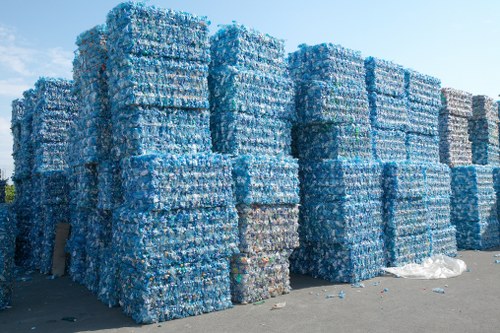
Bulk waste collection is not only for homes. Offices, shops, studios and other business premises often need furniture, equipment and general waste removed when layouts change or storage areas fill up. The items may include desks, chairs, shelving, filing units, displays and mixed waste from a fit-out or relocation. A well-planned collection keeps the removal organised and avoids waste lingering in work areas.
Where the load is mainly commercial, services such as office clearance and business waste removal can provide a better match. These are useful when the collection involves workspaces, stock rooms or equipment rather than domestic furniture alone. If the waste is mixed, bulky and time-sensitive for premises management, a bulk collection can still be the more straightforward route because it allows several categories of item to be handled together.
For businesses, it is often sensible to separate reusable fixtures, recyclable items and general waste before the visit. That does not require a full audit; a basic understanding of what is staying and what is leaving is usually enough. With that in place, the collection can be shaped around your premises, your access arrangements and the type of waste you want removed.
Outdoor waste, garden materials and builders’ debris
Some bulk waste is generated outside the home or alongside improvement work, and it can include a surprising mix of materials. Garden furniture, old planters, fencing, broken sheds, bags of soil and heavy offcuts can all form part of a bulky load. Likewise, small renovation jobs may create piles of mixed debris that are too awkward for routine disposal but do not warrant a full site clearance.
For these situations, it can be useful to look at garden clearance alongside builders waste clearance. Those services suit different kinds of heavy, untidy waste, but both sit comfortably within the wider bulk collection offer. If you know the material is mostly green waste or mostly building debris, choosing the closest match can make the plan clearer and the sorting easier afterwards.
It also helps to note whether the waste is loose, bagged or still in usable form such as panels, lengths or dismantled frames. That information affects how the load is handled and whether any preparatory sorting would be useful. The best collections are not the most complicated ones; they are the ones where the waste category is described clearly enough for the removal to be arranged sensibly.
How to request a quotation
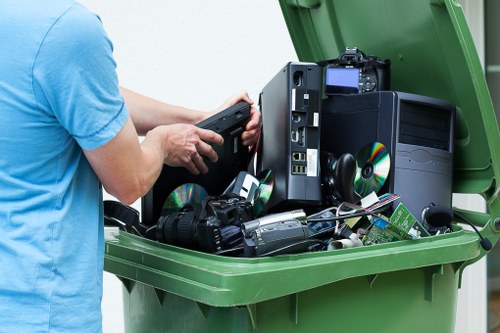
To request a quotation, begin by identifying the main item types, the approximate quantity and any access details that may affect the collection. If the bulk waste includes mixed materials, it is useful to mention that too, because the load may need a different approach from a single-item uplift. Photographs can help, but even a concise description of the items, the floor level and the space available for loading can be enough to start the process.
A short list is often the easiest way to organise the enquiry. For example: item types, number of pieces, whether anything is heavy or bulky, and whether the collection is from inside or outside. If you are comparing options, you can also check the pricing page at pricing and quotes and then choose the service page that best fits the waste. Keeping the enquiry focused helps the quotation reflect the real work rather than a guess.
Once you know what needs removing, ask for the quotation that matches the load. If the waste is mainly one category, a targeted service may be best; if it is a mixed group of bulky items, a general bulk collection may be more suitable. Either way, the aim is to make the next step clear, practical and easy to arrange.
Sorting, recycling and responsible disposal
Bulk waste collection is only part of the job; what happens after loading matters as well. Many bulky items contain materials that need separating before final disposal, such as metal, wood, plastics, textiles and electrical components. Where possible, those items are directed into suitable recycling routes rather than treated as general waste, which is why a clear description of the load is useful from the outset.
Our related page on recycling and sustainability explains the broader approach to reuse and disposal, while waste disposal covers the end point for items that cannot be recycled or reused. If your load includes appliances or mixed white goods, the service can be matched to the materials involved so that the collection is not just removed, but handled with the disposal route in mind.
Not every item can be broken down in the same way, and not every collection will produce the same recycling outcome. That is normal. What matters is that the waste is assessed honestly and routed appropriately. If you have a few items that may be reusable, recyclable or unsuitable for ordinary disposal, mention them when asking for the quotation so the collection can be planned with those differences in mind.
About London
London is the capital of the United Kingdom and one of the world’s most layered urban centres, shaped by centuries of growth along the River Thames. The city’s form reflects Roman origins, medieval streets, Georgian squares, Victorian expansion and modern redevelopment, often within the same district. Its landscape includes major landmarks such as the Tower of London, Westminster Abbey, St Paul’s Cathedral and the Palace of Westminster, alongside quieter churches, markets and civic spaces that reveal how many different periods coexist in close proximity. The Thames remains a central geographical feature, crossed by a dense network of bridges and lined with embankments, piers and riverside paths that link historic and contemporary parts of the city.
Useful service choices across the load
Different collections need different levels of detail, and that is why the service pages are organised by item and setting as well as by broad waste type. A bulk waste visit can include one or several categories, but a more specific page is helpful when the items are uniform and require the same handling. This can be the cleaner option for a household clear-out, a landlord changeover or a business room that needs emptying.
Where the load is mainly household furniture, the pages for furniture disposal, furniture removal and large-item collection may help you compare the best fit. For mixed or more general waste, a broad collection page is often the simplest route. We keep the structure practical, so you can move from a general bulk request to a more specific option when the items call for it.
It is also worth thinking about whether any item needs dismantling before removal. Not every collection requires it, but a bed frame, wardrobe or office unit can be easier to handle once separated into manageable parts. If you are not sure, describe the item as it is and let the quotation be based on the actual condition rather than on an assumption.
Booking the collection that fits
Once you have narrowed the service, the final step is choosing the collection that suits the waste, access and timescale. Some customers want a single load removed in one visit, while others need different parts of the property cleared in stages. A good quotation should reflect that distinction, so the removal can be arranged around the practical details instead of forcing the job into an unsuitable pattern.
If your needs are still broad, the main bulk waste page at bulk waste collection is the most direct place to start. If the job is more defined, the item-specific pages can help you compare the exact service. When you are ready, make your enquiry with the load description, and keep the final request simple: what is going, where it is, and how much needs to be removed. Request a quotation when you have the list ready.
Our aim is to make bulky waste removal feel organised rather than complicated. With the right page selected, the request can be based on the real items and the real access conditions, which gives you a clearer picture of the work. If you need to proceed, send the details and ask for a quotation that reflects the collection you actually need.